Posts
Posts


Yesterday I began a description of arches meeting at right angles, and how this unique arrangement might possibly be found in DNA molecules, in structures known as centromeres and telomeres. I realized today that I’ve already written about this odd masonry detour back in April, 2010. So today I borrow from this earlier entry and expand a little, since it is a pretty interesting subject .
The system I described yesterday is some interesting geometry, I think it's fundamental and basic, and may well exist in nature. In particular, I propose that it may exist in features of DNA.
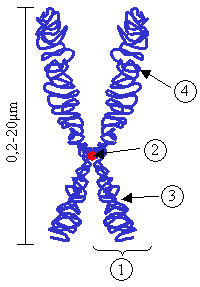
Most of you probably know that DNA is a double helix. Think of the double helix of DNA as forming a big "X". The ends of the 'x' are telomeres, the center of the 'x' is the centromere.
Centromeres are an originating site of DNA replication (copying begins here). Telomeres are a terminating site of DNA replication. It is proposed that the structures of telomeres and centromeres approximate a structure wherein a combination of four right circular cylinder sections (whose 2 axes of rotation are at right angles to each other) of radius = 1; and also of a section of a hemisphere of radius = 1.5. Here the double helix of DNA is viewed as a right circular cylinder of radius = 1.5. Cylinder sections combine (superimpose) with a spherical section through a four-fold axis of rotation. The geometry of this arrangement may create two optimal energy states simultaneously. This arrangement may be seen as a natural attempt to “square the circle.”
Background
A telomere is a region of repetitive DNA at the end of chromosomes, which protects the end of the chromosome from destruction. Derived from the Greek telos (end) and meres (part).
During cell division, the enzymes that duplicate the chromosome and its DNA can't continue their duplication all the way to the end of the chromosome. If cells divided without telomeres, they would lose the end of their chromosomes, and the necessary information it contains. (In 1972, James Watson named this phenomenon the "end replication problem.") The telomere is a disposable buffer, which is consumed during cell division and is replenished by an enzyme, the telomerase reverse transcriptase.
This mechanism usually limits cells to a fixed number of divisions, and animal studies suggest that this is responsible for aging on the cellular level and affects lifespan. Telomeres protect a cell's chromosomes from fusing with each other or rearranging. These chromosome abnormalities can lead to cancer, so cells are normally destroyed when telomeres are consumed. Most cancer is the result of cells bypassing this destruction. Biologists speculate that this mechanism is a tradeoff between aging and cancer.
I propose that the following geometry may be present in a telomere:
Why bother with this? Centromeres are largely responsible for cell reproduction, when centromeres malfunction genetic disease results; telomeres are largely responsible for aging. Any insight into the functionality of these structures is important to science and medicine.
Here's an interesting article on how geometry can have a direct effect on gene expression. I owe this reference to Alan Michelson, who brought it to my attention, as if to say: "maybe you're not so crazy Pete." Thanks Alan. Here's the article.
Here's an interesting article on how geometry can have a direct effect on gene expression. I owe this reference to Alan Michelson, who brought it to my attention, as if to say: "maybe you're not so crazy Pete." Thanks Alan. Here's the article.
Yesterday I began trying to describe the possibility that a particular helicity of cylindrical sections meeting at right angles -into a larger sphere- may be found in structural sections of DNA known as telomeres and centromeres. To summarize this theory with images, a telomere may have a "turn-in" type structure:
A centromere may have a "turn-out" type structure, shown as:
Below is a view of a telomere, looking at the end of a section of DNA, essentially looking down the "cylinder" of the double helix of DNA. The helicity of DNA changes as a chromosome replicates itself, and it seems that this helicity is what is described in those right angle intersections shown above. Here is a view of a telomere, note the quadrature, or squaring of the structure:

A catalyst works by providing an alternative reaction pathway to the reaction product. The rate of the reaction is increased as this alternative route has a lower activation energy than the reaction route not mediated by the catalyst. The geometry described here is analogous to providing an alternative route with lower activation energy.
The centromere and telomere structure are similar to fullerene molecules in a few striking ways. The presence of hexagons and pentagons within the base sections is a feature the telomere shares with fullerenes. Cylinder and sphere sections are found in both centromes & telomeres and fullerenes. It is proposed that centromeres & telomeres create a lowering of thermodynamic or activation energy ‘threshold’: the same is true of fullerenes as evidenced by their existence in nature.

Close examination of DNA geometry seems to have slowed immensely since Watson and Crick discovered the double helix. DNA is more than a ‘blueprint’; it is the blueprint, architect, engineer, construction worker and building inspector. It is more than these analogs; it is the actual thing itself. This appears to merit a close inspection of its structure and geometry in order to more fully understand it. If this theoretical (geometrical) approach is coupled with the knowledge gained from the empirical approach (i.e.- mapping of the human genome) then a much deeper level of understanding may be obtained.
A cell creates itself and closes itself off. It has genesis and distinction (becoming distinct, having a boundary within which it exists). This geometric model works for the combination of origin (sphere) and growth (cylinders). This is somewhat analogous to the thermodynamic conditions necessary for nucleation and growth in crystal formation. Duplication results in 2 spheres as distinct cells. The separation and distinction of 2 from 1 embodies or relates directly to the activation energy threshold.
We've had a look at one possible role of geometry, to try and show that geometry can play an important role in how things work.
Today there was an interesting article posted by Physorg.com on carbon tubes and water. This remains a fascinating topic which merits further investigation.

I am unaware of anyone who may have stumbled across, or is investigating, or is even aware of the geometrical structure which I propose exists in the centromere and telomere structures of DNA. I think this is worth looking at.